Assess the starting surface
A rigid plank still needs a suitable base. Review surface condition, flatness and the selected product's moisture requirements before treating a construction choice as a solution to the existing floor.

Lakeland Home Flooring · Central Florida
A convincing wood look is only the starting point for choosing luxury vinyl plank. The construction, surface finish, plank dimensions and installation requirements all deserve attention. We help you compare LVP samples at home and plan a replacement that connects the product specifications with the way your rooms are used.
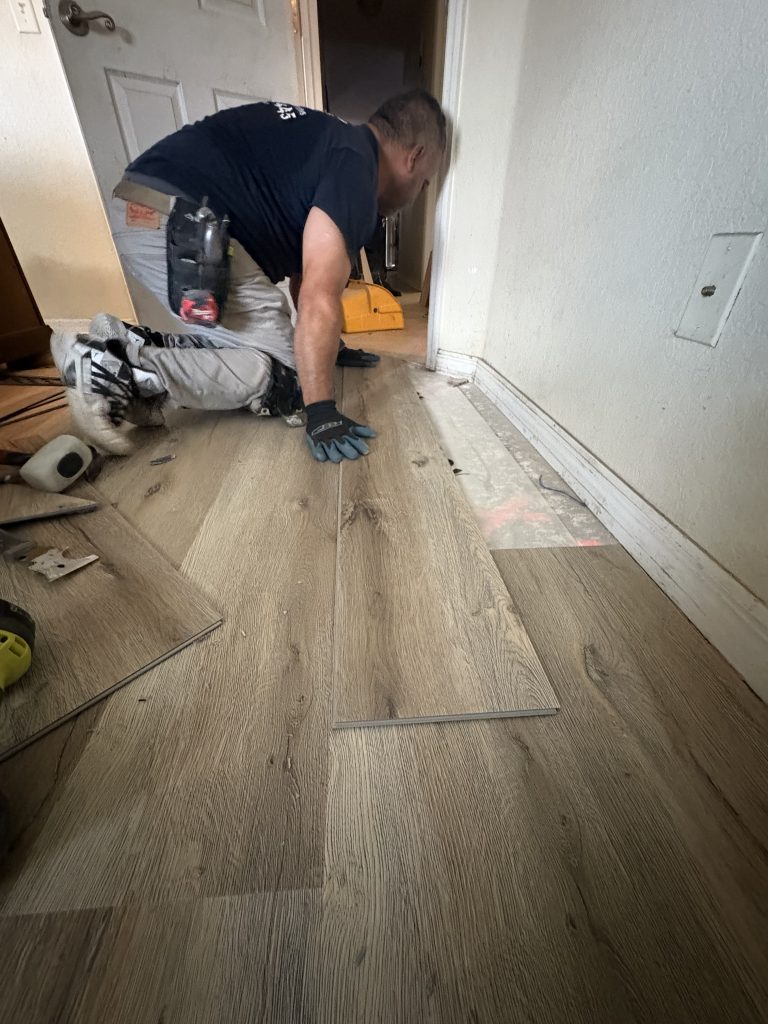
LVP is a category, not one uniform product. The decorative layer creates the visual, the protective surface faces daily use, and the underlying construction supports the plank. Some collections include an attached pad. Two similar-looking options can therefore differ in their installation requirements and underfoot character.
When comparing specifications, keep total thickness separate from wear-layer thickness. A bigger number in one category does not settle every performance question. Ask for the product name and written specifications so you know what is actually being compared. Our flooring catalog is a starting point for colors and collections; an in-home estimate adds the context of your furniture, connected rooms and existing surfaces.
These parts of the project help determine how the selected plank becomes a finished floor across your home.
LVP decisions are easier when the product, room layout and preparation are considered together.
Compare the decorative appearance, wear layer, construction, dimensions and manufacturer guidance for each candidate. Discuss your household routine so you are choosing relevant features rather than chasing the largest specification.
Look at long sightlines, hallways, doors and adjoining materials. Discuss plank direction and transition locations early, including any manufacturer limits that affect a continuous installation across connected spaces.
Review the exact product, rooms, preparation, removal and trim included. Clarify furniture responsibilities and any conditions that need reassessment after the existing floor is removed before finalizing the project sequence.
The wear layer and overall plank thickness describe different things. A product comparison should also consider the finish, intended use, construction and warranty terms. None of those features makes the floor scratch-proof. Everyday care, grit at entryways and the way furniture is moved remain relevant after installation.
Texture changes both the look and the feel of the sample. A pronounced bevel can emphasize individual planks, while a subtler edge gives a quieter appearance. Look at several decorative boards where possible, particularly if the sample has strong knots or contrast. A small piece may not show the full pattern range. The best shortlist is one you understand: what the specifications describe, which features matter in your home and which are simply different ways of presenting a similar visual.
Plank direction affects the view through adjoining rooms. A direction that looks natural in the living area may create a different effect in a narrow hallway. Discuss the main sightline, starting points and the way the layout meets fixed features before the installation begins.
Wide or long planks do not automatically make every space feel larger. Their proportions need to be judged against the actual room shapes and furniture. Layout also affects cutting and material quantities. If you want to run flooring continuously, ask whether the selected product permits the proposed arrangement and where transitions are required. The trim and finishing plan should account for those locations. Resolving them on paper is easier than deciding at a doorway once the installation has reached it.
A waterproof plank does not waterproof the room, stop water entering around the floor or correct moisture in the substrate. Surface spills and moisture coming from below are different situations. Mention known leaks, previous damage or areas that stay damp so the underlying issue can be assessed rather than covered.
Similarly, an attached pad is not permission to add another layer underneath. The selected manufacturer’s instructions determine which supporting materials are permitted. Extra cushioning can be incompatible with a particular locking system. Ask what the planned assembly includes and why it suits that collection and surface. For a replacement project, these details are part of choosing the floor itself. They should be clear before you buy material based only on its color, advertised water claim or thickness.
Customer reviews
Installed LVP pricing combines the selected plank with labor and the work needed beneath and around it. Removal of bonded flooring, correcting uneven areas and finishing several doorways can change the total even when square footage is similar. Request an itemized in-home estimate that names the collection, quantities, preparation allowance and transitions so you can compare equivalent completed projects.
LVP can go over some existing tile floors when the selected product permits it and the tile provides a sound, suitably flat surface. Uneven tiles, deep grout joints or loose areas may require preparation or removal. Have the finished height checked at doors, cabinets and neighboring flooring. Avoid assuming that a thicker plank will make an unsuitable tile base acceptable.
LVP approved for kitchens or bathrooms can be a practical choice, but waterproof product claims do not mean every installation condition is acceptable. The instructions still govern perimeter details, the supporting surface and permitted rooms. Ask how moisture concerns will be assessed before covering the floor, and read the product’s water-related warranty exclusions before treating it as protection against every leak.
LVP can be a suitable option for households with large dogs when the selected collection matches the expected use. Compare the protective surface, maintenance guidance and any specific pet-related warranty terms. Scratch resistance does not mean scratch immunity. Bring up muddy entries, food and water bowls, and active play so you can evaluate the actual collection against your daily routine.
First check that both quotes specify the same plank collection, installation area and fitting method. Then compare demolition, disposal, preparation, underlayment when required, transitions and trim. Look for differences in furniture responsibilities and how unexpected subfloor work is authorized. A lower installation rate can become a higher project total when essential steps are listed separately or left undefined.
Book a free in-home estimate to see vinyl plank samples in your space. We will discuss the specifications, layout and installation scope that matter to your replacement project.