Compare the full selection
Explore flooring options with a clear list of preferences for tone, texture and upkeep. Bring photographs of any finishes that cannot be viewed during the estimate.

Lakeland Home Flooring · Davenport, FL
A new wood floor should work with the finishes you already love. Compare engineered wood samples in your Davenport home, understand the differences behind the surface, and plan a coordinated installation across your living spaces with Lakeland Home Flooring LLC. Free in-home estimates help bring those decisions together.
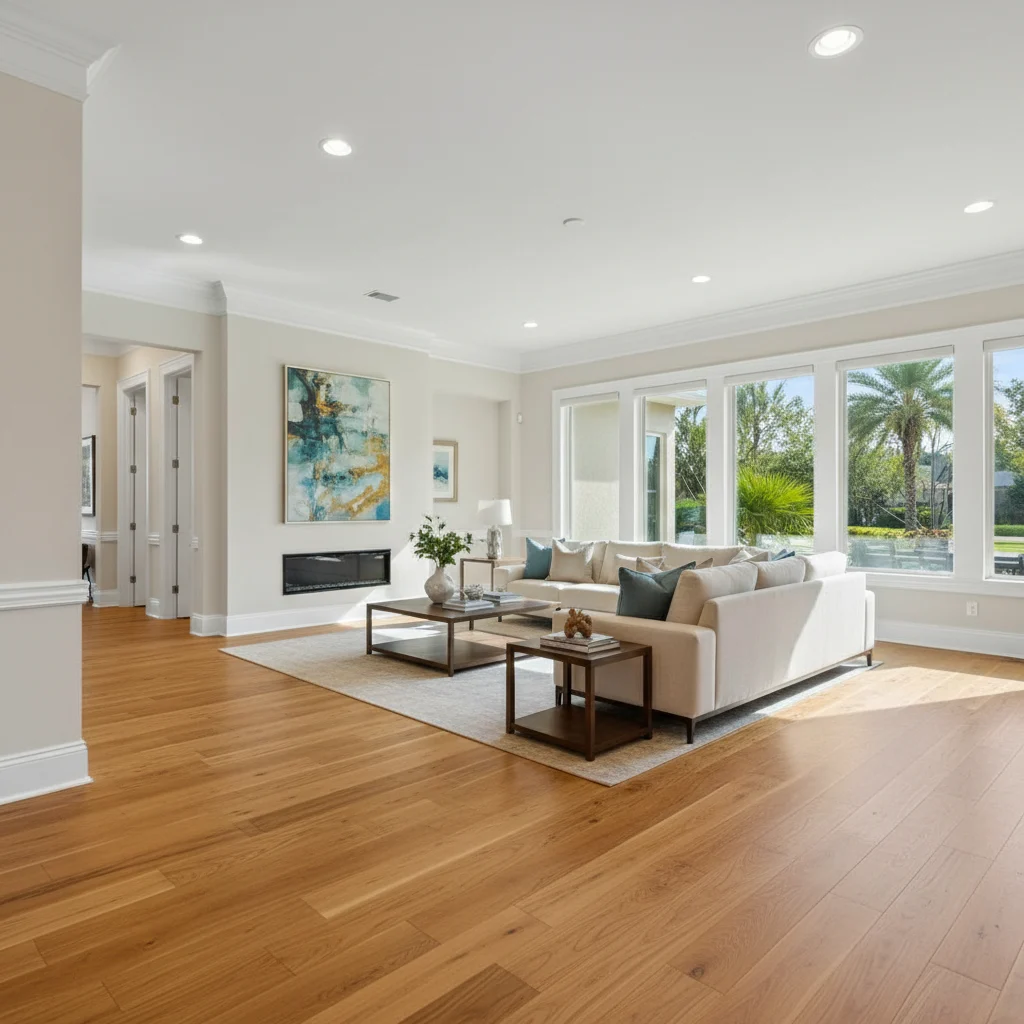
Cabinets, stair rails, interior doors and large furniture pieces all influence how a wood floor looks. Before choosing a plank, identify which finishes will remain and which you expect to change. You do not need an exact color match between every wood surface. A deliberate contrast can look more settled than two finishes that almost match.
Our shop-at-home approach lets you compare samples beside those fixed elements. Look at the floor in daylight and under your evening lighting, then view it from the adjoining rooms. Our engineered wood overview provides a starting point; the in-home visit connects that information to the actual space and installation scope.
The surface color is one part of a finished project. Consider the supporting work before settling on a material allowance.
A good selection process narrows the appearance and installation questions together, so the written scope reflects more than square footage.
Show us the rooms included, the flooring that will stay and any troublesome doorways. Point out planned cabinet or painting work so the installation can be considered within the larger renovation.
Review the product information alongside the sample. Discuss surface texture, finish, plank dimensions and maintenance expectations, then check which installation methods are approved for the specific flooring and site.
Review material quantities, removal, preparation, furniture handling and trim. Ask how any conditions uncovered after removal would be documented and priced before additional work proceeds.
Engineered wood has a real wood surface, but products differ in construction. The overall thickness is not the same measurement as the thickness of the visible wood layer. Ask for the actual product specification rather than assuming a thicker plank automatically provides more future sanding opportunities.
Look at the complete range of grain and color variation represented by the product, not just the most even-looking corner of one sample. If you prefer a quiet, consistent appearance, say so before ordering. If knots and movement are part of the appeal, discuss how much variation you want across the room. These are selection preferences, not a ranking of better and worse wood.
Some engineered floors may be candidates for sanding and refinishing; others are not. Suitability depends on the product, the remaining wood surface, its condition and any previous work. A statement that a floor is real wood does not establish how many times it can be sanded.
Changing the finish later may also change the appearance you selected, especially where the original surface has texture or a particular color treatment. If future restoration is a major reason for buying wood, raise that priority during selection and request the manufacturer’s guidance. Routine care remains necessary even when a product offers some restoration options. Keep its care instructions and product identification with your project records.
Matching an existing floor is more demanding than finding another product called oak or walnut. Age, finish, board width and lighting all affect the comparison. When an exact continuation is uncertain, a planned change at a doorway or a complementary tone may produce a more intentional result.
Take this decision back to the floor plan. A long sightline through several rooms can make a near match especially noticeable. Review trim and finishing options alongside the samples, including where a transition is technically required. The final detail must support the installation requirements as well as the appearance. We can discuss materials and installation together during your Davenport estimate.
Bring the comparison back to the finishes you cannot easily replace. If you are keeping stone counters, painted cabinetry and a stained stair rail, choose a few samples that relate to that group rather than testing dozens of nearly identical shades. Record the product names beside photographs so you can remember which option you preferred. Photographs are useful notes, but the physical sample in the room should guide the final color decision because camera exposure and screens can change the appearance.
Customer reviews
Budget for the finished floor, including the wood, installation method, existing-floor removal, substrate preparation and finishing trim. Two engineered wood products can look similar while differing in construction, usable wood surface and installation requirements. Ask for an estimate that identifies the exact product and separates preparation allowances from confirmed work, so a lower initial price does not hide a larger unfinished scope.
Engineered hardwood is worth considering when a real wood surface matters most to you. Luxury vinyl plank deserves a close look when your priorities lean toward a wood appearance and a product approved for frequent household spills. Compare the actual products for moisture limitations, surface protection and installed cost; neither category name tells you everything about day-to-day performance or long-term upkeep.
Engineered wood can suit a Florida home when indoor conditions and the installation meet its manufacturer’s requirements. Its layered construction reduces movement compared with solid wood, but it still responds to moisture. Before buying, have the installer check the substrate and explain the required indoor humidity range, any moisture-control system and how those conditions must be maintained after installation.
Some engineered hardwood can be refinished; others have too little usable wood above the backing for another sanding. The decision depends on the wear layer, previous sanding, surface condition and flatness. If future refinishing affects your purchase, ask for the product’s written guidance before ordering. For an existing floor, obtain a professional assessment before choosing between restoration and replacement.
The installer should examine the existing floor, substrate condition, moisture considerations and the heights where wood will meet other surfaces. Ask how those findings affect the approved installation method and preparation budget. A useful quote also identifies trim, removal responsibilities and how additional work discovered after demolition will be approved, giving you a clearer basis for comparing competing proposals.
Book a free in-home estimate in Davenport to compare engineered wood samples, discuss the rooms involved and review materials plus installation. Call Lakeland Home Flooring at 863-380-2445 to start planning.